Autumn fertiliser is for the roots, not the shoots: give phosphorus, potassium and organic matter, do not give heavy nitrogen, and start any programme from a soil test of that particular orchard.
After harvest, the grower usually either abandons the orchard or spreads a top dressing of nitrogen in the hope that the tree will sleep strong. Both are common mistakes. In autumn, shoot growth slows, but in many parts of Iran — from the Isfahan plain to the apple orchards of the Zagros and the pistachio of Kerman — the roots stay active until the soil gets really cold. That window is the time when reserves are built and roots extend. Autumn fertiliser must feed that underground activity, not start new leaf growth in November. Farin Kesht Taban writes an autumn programme only after seeing the soil and leaf tests of that orchard; there is no general prescription for every cultivar and every soil texture.
Why the roots are still working in autumn
As days shorten and the air cools, a deciduous tree moves carbohydrates from the leaves back to the roots and buds. If soil moisture is balanced, fine new roots are built, and those roots store phosphorus, potassium and some micronutrients for the following spring. Gradual cold accompanies this process; a sudden cold snap after a warm spell and a nitrogen feed builds immature tissue and raises the risk of shoot frost damage. In warmer orchards, such as parts of Khuzestan and southern Kerman, autumn is longer and there is more opportunity for organic and phosphate fertiliser; in Chaharmahal and Azerbaijan that window is short and must be finished before the soil freezes.
Phosphorus and potassium, not heavy nitrogen
Phosphorus moves with difficulty in Iran's calcareous soils, and if it is to reach the root zone it is better given in autumn in a band or a furrow at the edge of the canopy shade, so that winter and the following irrigations move it a little. Potassium plays a role in bud filling, in tolerance of drought and cold, and in next year's fruit quality; its shortage is far from rare in Iranian apple, grape and pistachio orchards. Nitrogen is a different story. A large amount of nitrogen in October and November builds soft, late growth, delays leaf fall and makes the tree susceptible to the first winter frost. If a leaf test shows a nitrogen deficiency, a small early amount — immediately after harvest, not in December — is defensible; a heavy autumn urea application is almost never a Farkesht prescription.
- Phosphorus: a slow-release source or superphosphate, placed in the root zone; a surface spread on calcareous soil has little effect.
- Potassium: potassium sulphate is usually more suitable than the chloride for Iranian soils, especially where salinity is an issue.
- Nitrogen: minimal in autumn; if needed, a small dose immediately after harvest and stopped entirely before hard cold.
- Calcium and magnesium: only on the basis of a test; adding gypsum or lime without a figure upsets the balance.
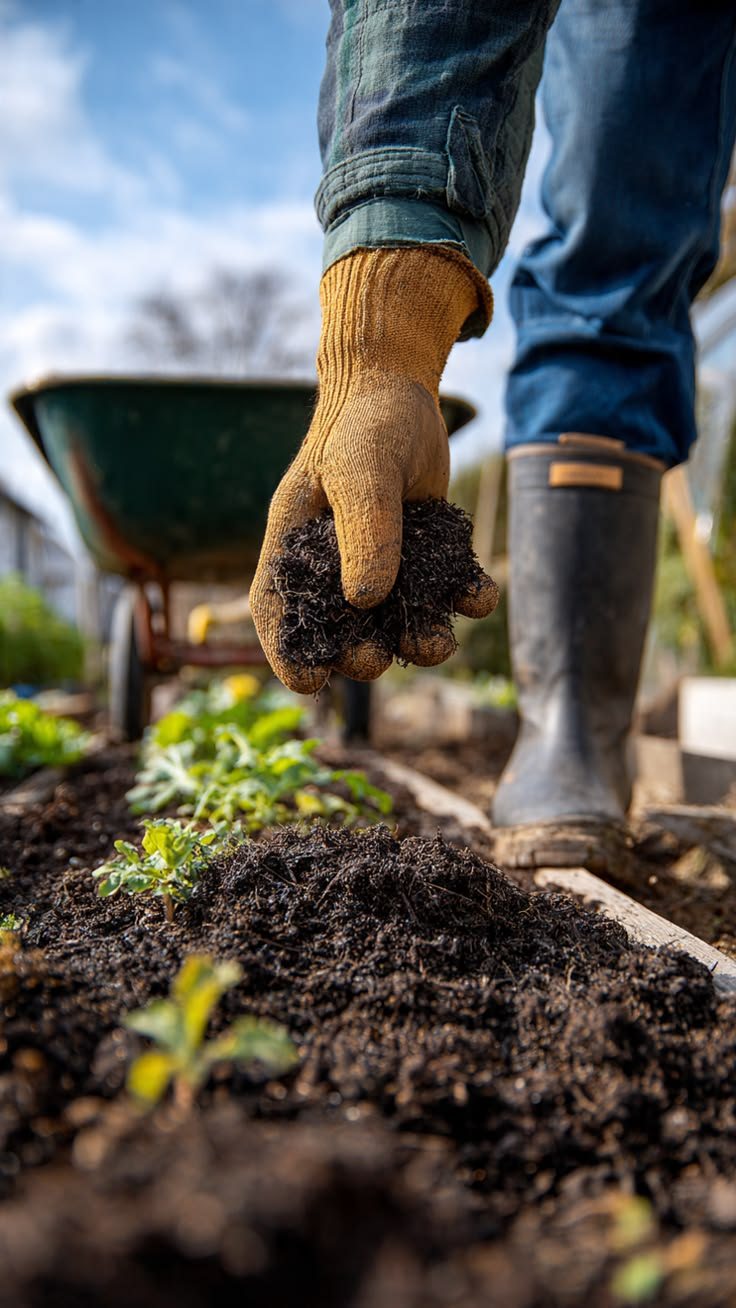
Give organic matter in autumn, but by calculation
Unrotted manure in autumn under the collar or over the surface roots makes both salt and ammonia, and invites rodents and collar disease. Spread mature compost or fully rotted manure in the canopy shade and work it into the surface soil, rather than building a mound around the trunk. In orchards on the light soils of Yazd and Kerman, organic matter raises the capacity to hold winter and spring water. On heavy, poorly drained soil, reduce the quantity and never dig a pit of fresh manure under the roots. Humic acid and similar products, if their quality is defined, are supplements, not a replacement for compost. The aim in autumn is to build the root bed, not to green up the orchard's grass.
Autumn is the season of the root. Any fertiliser that builds new leaves works against the tree at the first frost.
Put the soil and leaf tests ahead of the fertiliser store
Ask a reputable laboratory for available phosphorus, exchangeable potassium, active lime, salinity and organic carbon. Take the sample from the canopy shade and the depth of active roots — usually twenty to forty centimetres — not from the foot of the trunk and not from a single point. A leaf test in August or September of the same year shows the cultivar's real deficiencies and makes the autumn targeted. A pistachio orchard low in potassium needs a different prescription from a peach orchard with fixed phosphorus. If the irrigation water is saline, coordinate the autumn fertiliser with controlled leaching and a low-chloride source; otherwise you gather salt in the very band where the autumn roots have been built.
- After harvest, record the state of the tree and the approximate date of leaf fall.
- Send off a soil sample, and a leaf sample if needed, and do not spread stored fertiliser until the result arrives.
- Place the phosphorus and potassium; spread mature organic matter in the canopy shade.
- Leave out heavy nitrogen and fresh manure.
- One irrigation after fertilising is enough to settle it and start the salts moving; do not flood.
Match the timing to the cultivar as well. In the apple orchards of Faridan and Semirom, leaf fall comes earlier and the phosphorus and potassium window is shorter; the fertiliser has to be placed before the soil cools deeply. In the pomegranate of Saveh and Qom and the pistachio of Kerman, autumn is longer and organic matter has more time to settle, but in the same places the salinity of the water rules out a chloride-bearing fertiliser. If a vine still has glossy green leaves, cut nitrogen off entirely so the wood ripens. Do not feed a newly planted tree like a twenty-year-old; a sapling needs dilute organic matter placed away from the collar, not a whole sack at the foot of the trunk. If autumn leaves are heavily spotted with fungal disease, do the orchard sanitation first; spreading fertiliser over diseased foliage is only an expense.
Successful autumn fertilising in an Iranian orchard has three signs: leaf fall on time and even; saplings and mature trees without soft late growth; and in spring, buds that open without delay. If a tree kept green shoots through winter, or the collar ended up covered in manure, correct the programme for next year. Farkesht writes this out on a plot map and by soil texture, because the same sack means something different in an apple orchard in Faridan and a pomegranate orchard in Saveh. Save the autumn for the roots; there is time in spring for nitrogen and crown growth.