Use tree shade, irrigation timing and sponge-like soil to design an Isfahan or Shiraz yard for the heatwave, so plane trees and pomegranates come through summer without severe scorch.
Summer on Iran's central plateau is no longer merely hot; the heatwave has become a recurring pattern. In Isfahan, Yazd and Kerman the shade temperature stays above forty degrees for days on end, and the surface of a yard's stone, tile and asphalt passes fifty-five. Shiraz gets intense radiation and low humidity in the same window, and Ahvaz meets the wave earlier and for longer. A yard planted with thirsty turf, a few seasonal flowers and one young sapling with no shade plan shows leaf scorch, midday wilt and wasted water within two weeks. Heat-resilient design means reading the prevailing wind, the building's shade in July, the paving material and the soil's water-holding capacity before you buy a single sapling. Farin Kesht Taban follows that order on urban and villa landscape projects: microclimate first, then species, then irrigation timing and depth.
What a heatwave does to trees in Iranian cities
Heat stress is not simply a shortage of water. When leaf temperature climbs past the threshold for effective photosynthesis, the stomata close, transpiration drops, and the canopy gets hotter still. In the calcareous soils of Isfahan and the edges of Yazd, that same heat makes iron and zinc harder to take up, and chlorosis appears on young leaves; the owner reads it as a pest and sprays, while the roots are effectively locked in hot, compacted ground. A street plane tree in Tehran or Isfahan with no watering basin, fed by water that only wets the surface of the lawn, burns along the leaf margin in a heatwave and dies back at the branch tips. Aleppo pine tolerates heat and drought better, but in unaerated soil under daily shallow watering its collar becomes prone to fungal rot. Ash is still the right choice in many central cities, provided it gets afternoon shade and a deep weekly soak rather than a daily spray.
Tree shade, the cheapest air conditioning a yard has
A mature canopy on the west and south-west side of a building drops the yard's surface temperature by several degrees and cuts the cooling load indoors. For Isfahan and Shiraz, ash or plane on the sun-facing side combined with mulberry along the southern wall builds broader, cooler shade than a dense row of silver cypress, which dries the soil out and closes the yard in on itself. Pomegranate and olive cast lighter shade, but their leathery leaves scorch less in the heat of Kerman and Yazd, and they fruit as well. Aleppo pine earns its place as a windbreak on the north-west side and as a dust filter, not as shade over a terrace. Set planting distances by the canopy diameter ten years from now, not by today's pot; crowded trees compete for water and light during a heatwave and all of them come out weaker.
- Plant the main shade tree to the west and south-west so it covers the terrace and the glazing through July and August afternoons.
- Keep plane and ash at least four to five metres away from walls and sewer lines.
- Put mulberry where dropped fruit will not make the paving slippery or foul the car route.
- Use Aleppo pine as a windbreak and dust filter, not as the yard's only source of shade.
- Under the canopy, replace thirsty turf with a low-water groundcover or a light-coloured stone mulch to cut reflection and evaporation.
When you water matters more than how much you water daily
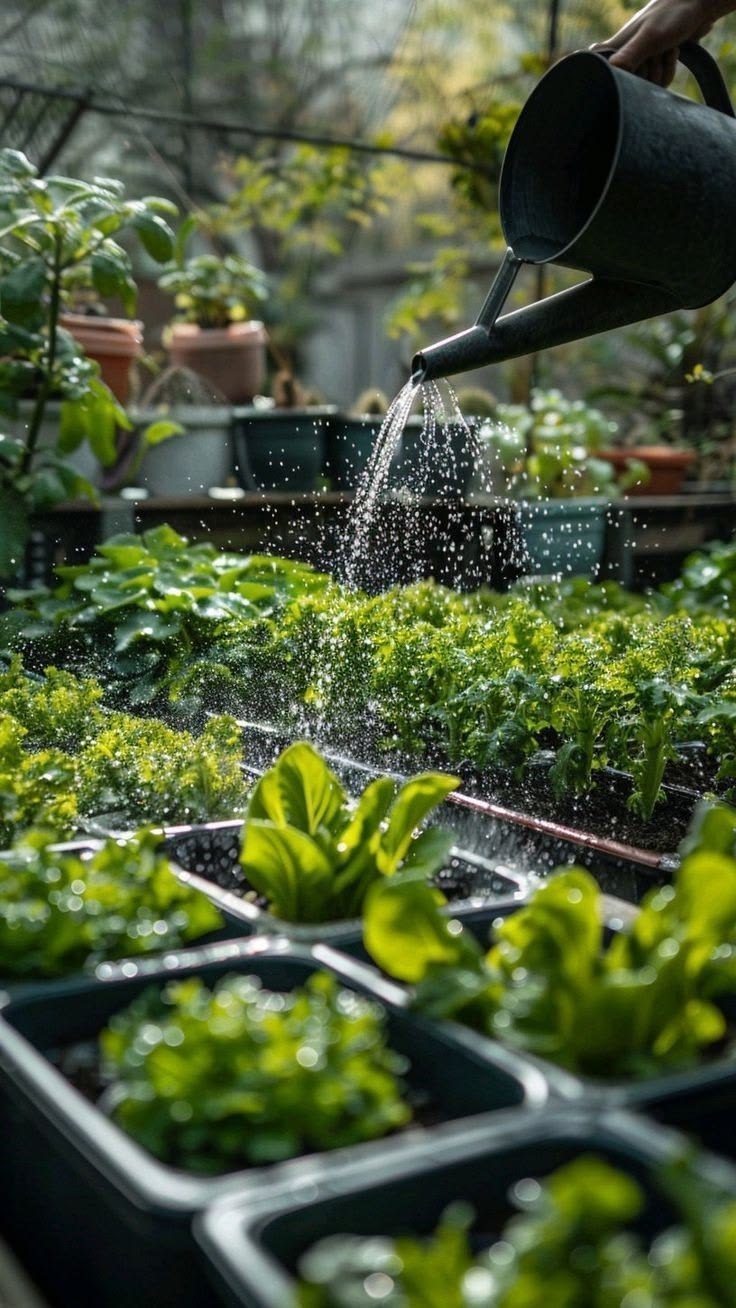
During a heatwave the owner usually reaches for the hose at noon, because the leaves look limp. That wilting is often a stomatal response, not root thirst. Midday watering wets the foliage and leaves the collar warm and damp, and much of the water evaporates before it reaches forty centimetres down. The right schedule for a yard tree in Isfahan or Yazd is this: very early in the morning or after the evening cools, deliver water into a basin or a drip line along the canopy dripline so the moisture front moves down into the active root zone. A two- or three-year-old sapling may need a deep soak every four to six days; an established tree every seven to twelve, depending on soil texture. Sandy soil on the desert margin dries out sooner, and compacted clay wets more slowly but also aerates more slowly. Push a finger or a probe thirty to forty centimetres down; if there is still moisture there, more water will only suffocate the collar.
Reconsider the thirsty lawn
Cool-season turf in Isfahan and Kerman either yellows in July or survives on daily irrigation, and in practice it is the tree's main competitor. Turf roots take the surface water and the tree's roots go hungry. If you insist on a green surface, hold the lawn to one small shaded strip and replace the rest with low-water groundcovers, washed decorative gravel, or a bed of Mediterranean plants. Lavender and rosemary do well in Shiraz and around Isfahan given free-draining soil and moderate lime; pomegranate and olive, as shrubs or small tree forms, give both a view and a crop. If you keep the lawn, take its irrigation off the trees' circuit. A single system that mists the turf daily and the tree with it usually kills the tree and does not green the lawn evenly either.
Sponge soil: the reservoir under your feet
The garden soil around many newly built houses in Isfahan and Tehran is construction spoil: compacted, low in organic matter, sometimes full of rubble, and high in pH. A bed like that behaves like concrete that happens to get wet; the water either sits on the surface or escapes through cracks and never reaches the roots. Before the heatwave, spread a five to eight centimetre layer of well-rotted compost over the canopy shade and work it into the top five to ten centimetres of soil, without burying the collar. Organic matter raises water-holding capacity, lowers surface temperature and keeps the microbial life going. Bark mulch or aged wood chips over that bed cut evaporation, provided they are kept three to five centimetres clear of the trunk. In strongly calcareous soil, plan the iron and zinc programme separately alongside the organic matter; compost alone does not solve chlorosis at pH eight, but it does help the roots take nutrients up.
Low-water plants that genuinely last in Iran
- Lavender and rosemary: right for a sunny, well-drained edge; in heavy clay left unamended, the collar rots.
- Pomegranate: a shrub or small tree for Kerman, Yazd, Isfahan and Shiraz; fruit plus light shade.
- Olive: good tolerance of heat and low water; be careful at severe highland frosts.
- Mulberry: fast shade and fair drought tolerance; account for fruit drop and strong roots when routing paths.
- Ash: a proven urban shade tree for central Iran, on deep watering rather than daily.
- Aleppo pine: a windbreak that tolerates pollution; its shade is poor for underplanting flowers.
A heat-resilient yard is not one that drinks no water; it is one where every litre reaches root depth and the canopy shelters the soil from direct midday sun.
If a heatwave scorched your trees this year, start next year in the autumn: finish the deadwood pruning, the collar correction, the mulch, the basin and the choice of replacement species before June. Do not plant a sapling at the peak of July unless you can give it temporary shade and precise watering. For orchards around Isfahan and villas outside Shiraz and Yazd, one soil and canopy visit before summer costs less than replacing three scorched trees in September. Farkesht can write the shading plan, the irrigation circuit separated from the lawn, and the organic-matter correction onto the plan of your own yard, so the heatwave never becomes a crisis.