
In the pistachio orchards of Rafsanjan and Sirjan, saline water, excess boron and shortages of potassium and zinc appear together. The nutrition programme has to be written against the irrigation EC and the soil's lime, not from a generic prescription.
Pistachio in Rafsanjan, Anar, Sirjan, Zarand and parts of Khorasan and Yazd stands on soil that bears no resemblance to an apple orchard in Isfahan or citrus in the north. On many of these plains the well water is saline, active lime is high, and in some plots boron approaches the toxicity threshold. In that environment, a nutrition prescription written for a humid, low-lime orchard is either useless or damaging. A pistachio nutrition programme has to start from the water quality and the soil chemistry of that particular plot, not from a general table of elements.
Salinity and the water's electrical conductivity: the programme's first number
Pistachio is more salt-tolerant than many fruit trees, but tolerant does not mean indifferent. When the electrical conductivity of the irrigation water rises, the tree spends more energy on osmotic adjustment, uptake of potassium and calcium is disrupted, and leaf margins scorch. In orchards where the water EC is chronically high, even if potassium fertiliser is applied, sodium competition in the root zone blocks uptake. Before any fertiliser recommendation, the well water's EC, the sodium adsorption ratio and the chloride concentration must be on paper. If those numbers swing from season to season — common in low-rainfall years in southern Kerman — the nutrition programme has to account for that swing, rather than one fixed prescription written for five years.
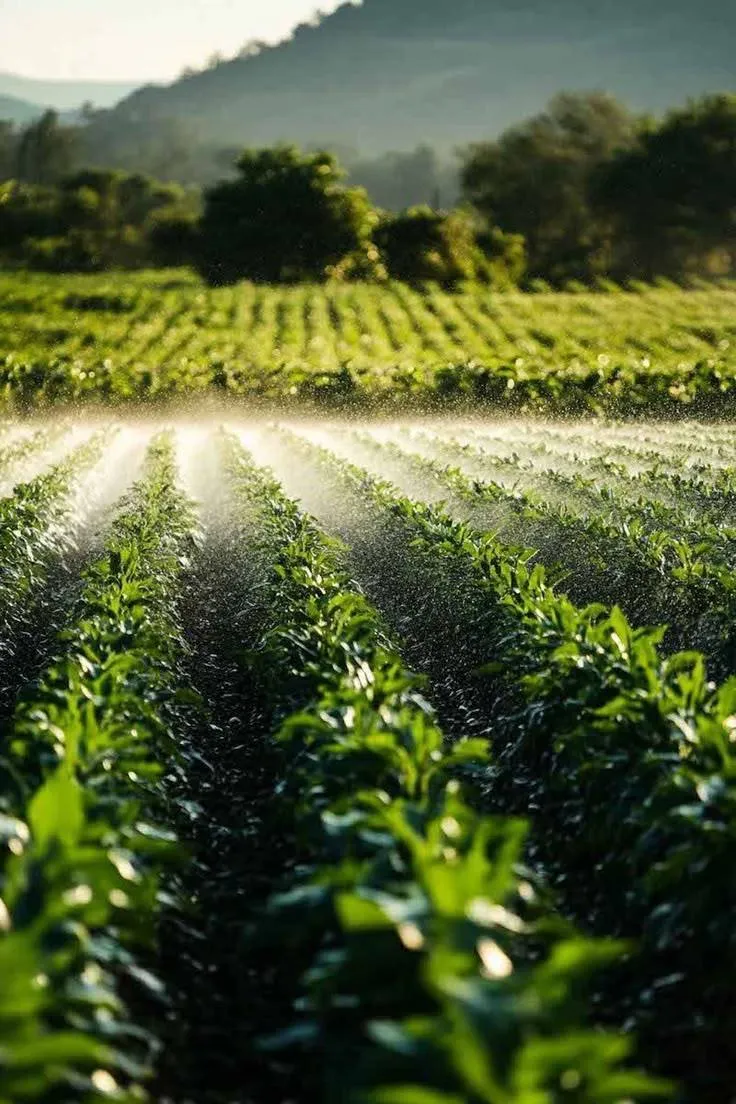
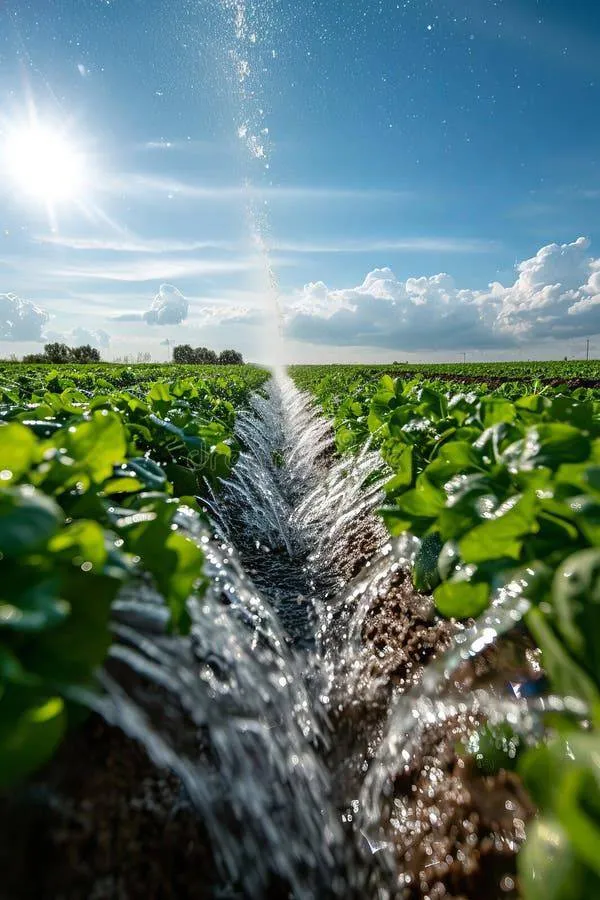
Drip irrigation in pistachio, without periodic leaching, accumulates salt precisely in the wetting bulb: exactly where the active roots are. Traditional flood irrigation moves the salt but wastes water and ruins aeration in heavy plots. Choosing between the two is a nutrition decision, not only an irrigation one. The leaching fraction has to be calculated from the water EC and the cultivar's tolerance threshold. Without that fraction, every sack of soluble fertiliser is in practice adding to the salt load.
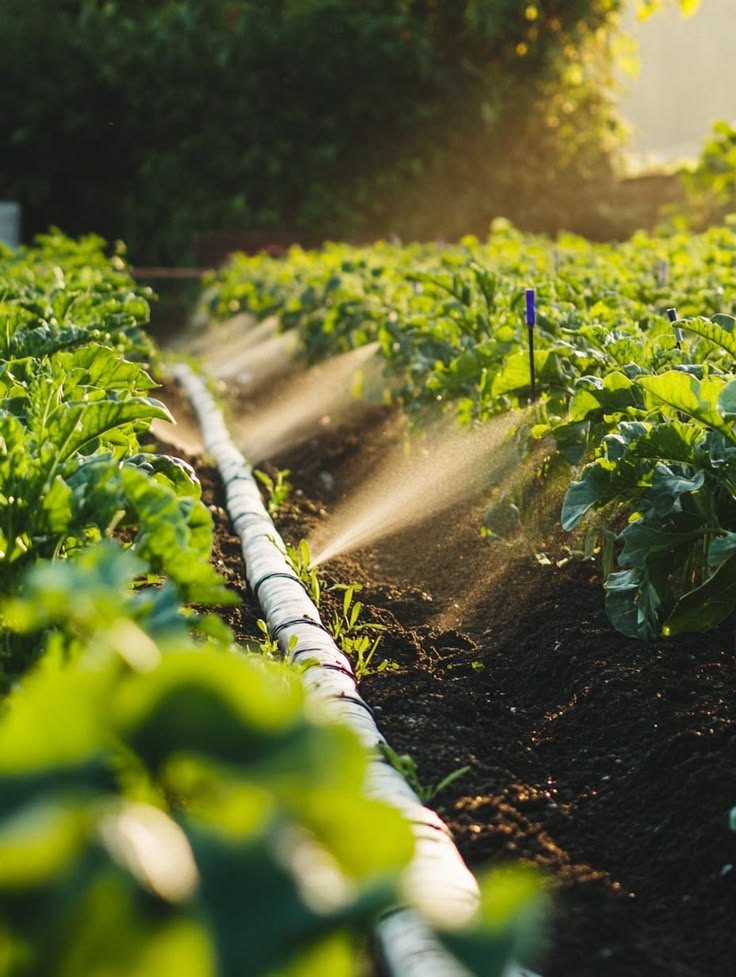
In Sirjan and Anar, growers who have several water sources with different EC should blend them at a fixed ratio rather than using a different well each time. A sudden swing in salinity causes marginal scorch even if the seasonal average is tolerable. The filter and the flushing of drippers are part of nutrition too; a blockage shifts the wetting bulb and takes the fertiliser to where the roots are not. Simply recording the water EC every month is more useful than any general potassium recommendation for the whole Rafsanjan plain.
Approach boron with caution
Boron in pistachio has two faces. A shortage disrupts fruit set and kernel filling, but an excess — which occurs in some waters and soils of Rafsanjan and Sirjan — gives tip and margin scorch, shoot dieback and reduced yield. Many blended micronutrient fertilisers contain boron by default. Repeated use of those blends on a plot whose water already carries boron creates toxicity. The simple rule is this: add boron to the programme only when a leaf or water analysis shows a shortage. Guessing about boron is the most expensive guess in a pistachio orchard.
- If the irrigation water is high in boron, drop boron fertiliser and rely on leaching and irrigation interval management.
- Confirm a boron shortage with a leaf analysis in late spring or early summer, not by the look of the leaf alone.
- Foliar boron, where needed, must be at a low dose and at a defined time; weekly repetition is not permissible.
- Do not use ready-made micronutrient blends without reading the boron on the label.
Potassium, zinc and calcium: three pillars that salinity displaces
Potassium plays a direct role in kernel filling, drought tolerance and stomatal regulation. In the saline orchards of Kerman, potassium deficiency is common because sodium takes its place on the soil colloid. Potassium should come from a source that does not add further chloride to the system if the water's chloride is already high. Potassium sulphate is more sensible than potassium chloride in many of these orchards. Tie the timing to kernel growth and to the period after fruit set, not simply to March. Soil-applied potassium with irrigation has a more durable effect than scattered foliar sprays; foliar work is a supplement, not the pillar of the programme.
Do not look at zinc and calcium separately from iron
Zinc in pistachio affects bud formation, pollination and shoot growth. Calcareous soil fixes zinc, and the deficiency symptoms — short internodes, small leaves, delayed bud break — are mistaken for iron deficiency. The difference lies in the leaf pattern and in when the symptom appears, but a firm diagnosis comes from leaf analysis. Calcium also plays a role in shell quality and in resistance to certain physiological disorders. In saline waters, even where soil calcium is high, an unfavourable sodium-to-calcium ratio disrupts uptake. On sodic plots, agricultural gypsum sometimes does more for cation balance than a soluble calcium fertiliser. Look at iron in these same orchards through a chelate stable at high pH; iron sulphate on the soil of Rafsanjan repeats the same story of fixation.
In Rafsanjan, read the water first, then the soil, then the leaf. Whoever starts from the fertiliser usually repeats that same fertiliser next year at a higher dose.
A practical framework for one season in Kerman
- Winter: water analysis and soil analysis at two depths; decisions on gypsum, soil potassium, and whether boron is needed or must be avoided.
- Start of growth: zinc where the deficiency is confirmed; iron only with a chelate stable at that plot's pH.
- After fruit set: potassium with irrigation and monitoring of the drainage EC in a drip system.
- Summer: avoid late nitrogen; manage the irrigation interval to prevent salt accumulating in the wetting bulb.
- After harvest: assess the leaves and the crop, and correct next year's programme from that plot rather than the neighbour's orchard.
Pistachio nutrition in Rafsanjan and Sirjan is not a job for a ready-made table. Water salinity sets the ceiling on the effect of any fertiliser, boron can swing from deficiency to toxicity, and potassium, zinc and calcium take on a different meaning in competition with sodium and lime. A successful programme is one updated each season with the numbers from that well and that plot. In Anar and Zarand too, if the well water changes, do not repeat last year's prescription without measuring. Farin Kesht Taban recommends the same route for the dry orchards of southern and central Iran: water, soil, leaf, then fertiliser.