Read the salinity of orchards in Yazd and Kerman from the water EC first. Calculate the leaching fraction, correct sodic soil with gypsum, and do not treat the salt ring of a dripper as the same problem as flood irrigation.
Salinity in Iran's dry orchards is less a mysterious disease than an account of water and soil that has been accumulating for years. In Yazd, Kerman, Semnan, South Khorasan and the eastern margin of Isfahan, the grower usually sees leaf-tip scorch, small leaves, shoot dieback and a sudden fall in yield, and reaches for iron or a fungicide. Until the electrical conductivity of the irrigation water is on the table, that prescription is a guess. Well water, a qanat or a blend with waste water all carry dissolved salt. If every irrigation lacks a fraction for taking salt out of the root zone, that salt stays in the active root layer and is more concentrated the following year. Pistachio, olive, pomegranate and date have a higher tolerance than many stone fruits, but tolerance does not mean freedom from management. In Rafsanjan, with relatively suitable water, a pistachio orchard bears for years; a few kilometres away, with the same cultivar and a higher EC, with no leaching and no drainage, the tree stays stunted and the kernel comes out hollow.
Water first: read EC and SAR separately
A water test must report electrical conductivity, the sodium adsorption ratio, chloride, boron and bicarbonate separately. EC tells you the total salt load; SAR the share of sodium relative to calcium and magnesium. An orchard with moderate EC and high SAR may lose its infiltration even if the leaves show no severe scorch yet. Conversely, water with a high EC and relatively good calcium is sometimes manageable if there is a leaching fraction and drainage. On many plains of Yazd and Semnan, the grower hears only the word salinity and spreads gypsum with no SAR figure. Gypsum on non-sodic soil with poor drainage sometimes raises the salinity temporarily, because it puts more salt into solution. Take the sample from the source that actually reaches the orchard, not from the house tap, and repeat it in the dry season; the blend of wells in August is not the same as in April. Put the water pH alongside those two numbers as well; alkaline water makes micronutrient uptake difficult and confuses the symptoms of salinity with iron chlorosis.
The leaching fraction: washing by calculation, not by waste
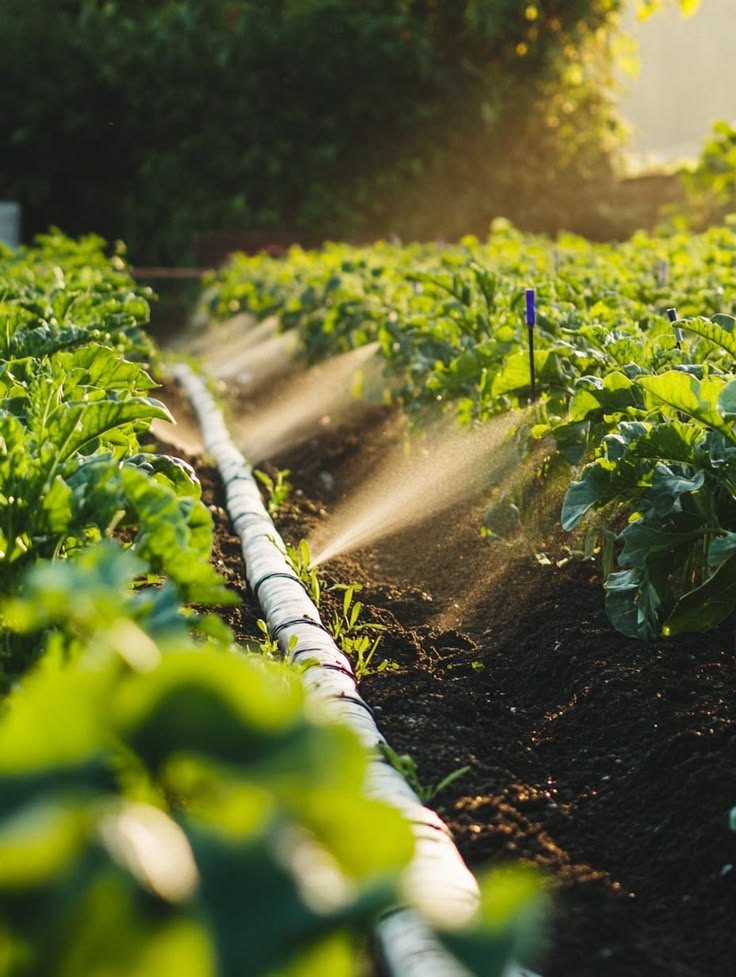
The leaching fraction is the share of water that must pass below the root zone and carry the salt out with it. If all the water is used up in the first thirty or forty centimetres, the salt stays right there. In the drip orchards of Kerman and Yazd this is common: a short interval, a small volume, a small wetting bulb, and a white ring of salt around that bulb. Increasing the frequency without increasing the depth makes the local salinity worse. In the traditional basins of South Khorasan and parts of Isfahan, the water volume is larger and deep washing sometimes happens on its own — but if there is no drainage or the water table is high, the salt is merely moved, or it comes back up from below. Calculate the fraction from the water EC and the tolerance threshold of that plot, not from the neighbour's habit. In a dry year the temptation to skip leaching is strong; the result is usually one or two seasons of acceptable yield and then a gradual decline of the roots. Apply the leaching when surface evaporation is low, and afterwards do not let the surface dry so hard that the salt rises again by capillary movement.
- Before any fertiliser programme, put the water sheet for that same well or source on the table.
- Match the leaching fraction to the root depth and the irrigation interval, not to more hours on the valve.
- If there is no drainage, heavy leaching only raises the water table.
- Potassium chloride fertiliser and unrotted manure in a saline orchard increase the salt load.
- Every two or three years, take a soil sample from two depths in the canopy shade to see whether the salt has gone down or stayed at the surface.
Drip and basin: salt gathers in two different places
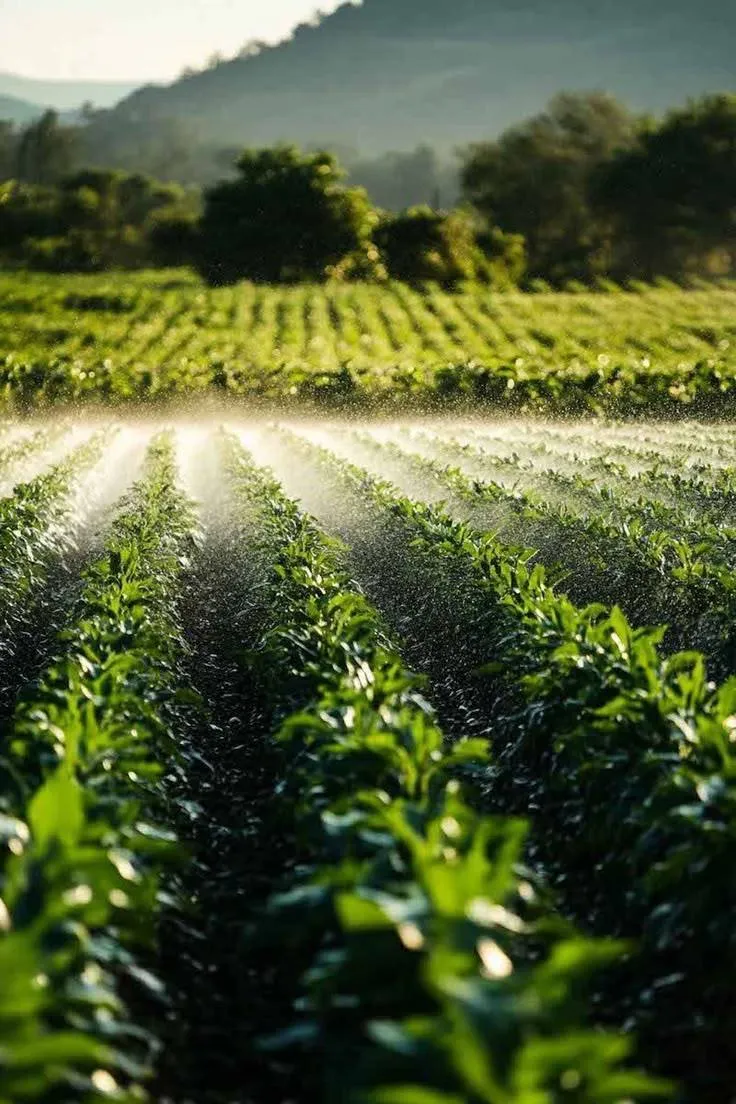
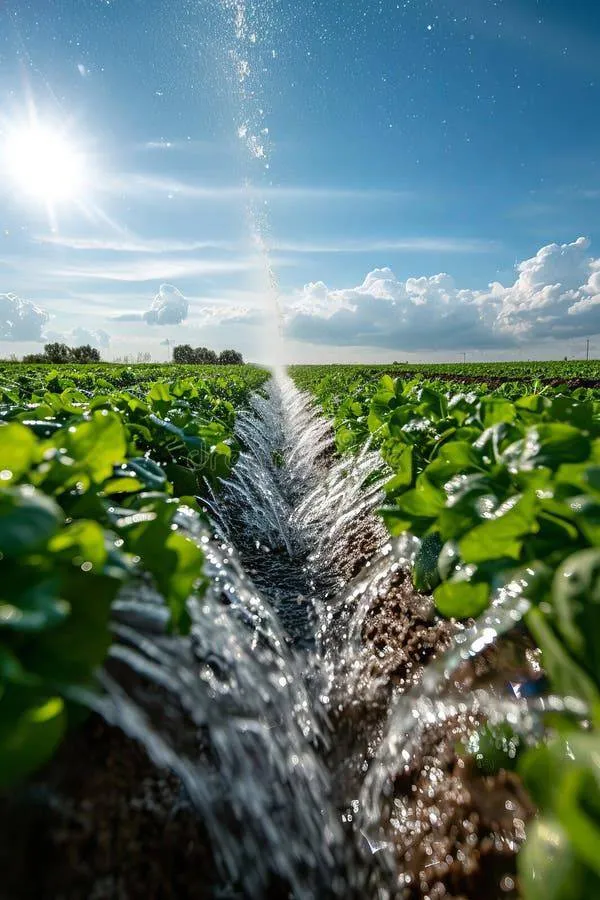
Under drip, salt moves to the edge of the wetting bulb and to the surface layer between two drippers. The active roots are inside the bulb; if the water volume only fills that bulb, the roots gradually reach the saline wall. The remedy is sometimes to widen the wetted radius with more drippers or by shifting the line slightly, and sometimes one heavier application among several normal ones to break the salt ring. Mulch over the drip line reduces surface evaporation and slows the rise of salt. In basin and strip irrigation, salt gathers mostly on the ridge and at the edge of the basin; planting on a saline ridge without leaching burns the sapling in its first year. Uniform flooding on the heavy clay of Isfahan, with no outlet, suffocates the roots and salinises them at the same time. Neither method is inherently anti-salinity. The better method is the one that carries moisture to root depth, has a controlled outlet, and does not leave the collar permanently in water.
Gypsum for sodic soil, not for every saline orchard
Saline soil means the soil solution has a lot of salt. Sodic soil means exchangeable sodium has taken a dangerous share of the exchange capacity, and the soil disperses when wet and crusts when dry. The field signs on the plains of Semnan and along the desert margin are very slow infiltration, surface ponding, a hard crust, and sometimes a soapy foam after rain. Here agricultural gypsum puts calcium in the place of sodium, provided there is enough water to carry the released sodium away. Spreading gypsum on saline but non-sodic soil with a low SAR does not solve the EC problem and wastes the money. Calculate the amount from the exchangeable sodium percentage and the texture, not from one sack per hectare. Mix the gypsum into the surface soil and follow it with a leaching irrigation. If a hard lime layer or dense clay is preventing infiltration, target the structure first with mature organic matter and by breaking the hardpan. Adding lime to Iran's alkaline saline soil is almost never the right prescription.
- The water sheet: read EC, SAR, chloride, boron and bicarbonate separately.
- A soil sample from two depths: salinity, exchangeable sodium, texture and lime.
- Establish whether the main problem is EC, SAR, or both.
- Choose the crop and rootstock from those numbers, not from a photograph of the neighbour's orchard.
- Write the irrigation programme around the leaching fraction and where salt gathers under that method.
- Bring in gypsum only if the soil is sodic, and look at the drainage outlet at the same time.
Pistachio, olive, pomegranate and date: a higher ceiling, not a licence to ignore
Pistachio in Kerman and parts of Yazd and South Khorasan has a higher salinity ceiling than peach and almond, but the kernel and the scion are more sensitive to salinity than the rootstock. As the EC of water and soil rises, vegetative growth falls first, and then hollow and misshapen kernels appear. Olive around Isfahan and on some plains of Fars tolerates moderate salinity if there is drainage; it does not tolerate saline flooding. Pomegranate bears on relatively saline soil in Yazd, Saveh and Birjand, but swings between drought and salinity intensify fruit cracking and leaf-margin scorch. Date in Bam, the groves on the desert margin and the hot southern belt has a high tolerance; the quality of the fruit and the dieback of the lower fronds are sensitive to the salinity and boron of the water. Choosing these four crops instead of a sensitive stone fruit is only sensible if leaching, drainage and low-chloride nutrition are all considered together. Planting pistachio in heavy ground with no water outlet kills the tree by suffocation and accumulated salinity rather than by dry air.
The water sheet first, then the leaching fraction, then gypsum if the soil is sodic. Iron fertiliser does not turn salinity green.
Managing salinity in an Iranian orchard does not start from fertiliser; it starts from the water sheet and ends at the leaching fraction, the diagnosis of sodic soil and the choice of crop. Do not swap drip for basin irrigation unless you have identified where the salt gathers. Do not spread gypsum without a number. If the water is saltier this year than last — a trend seen in many wells in Yazd and east of Isfahan — put next year's programme on paper in the same year. In central Iran's orchards, Farin Kesht Taban writes the salinity prescription from the water EC, the soil SAR and the irrigation method of that particular plot, not from one figure for the whole province.