Keep trees in Isfahan and Yazd alive with deep, infrequent water at the dripline, a basin and drip lines; lawn water does not quench a tree, and Iran's water scarcity leaves no room for waste.
Water scarcity in Isfahan, Yazd, Kerman and south Tehran is no longer a future scenario; rationing and cuts are part of the weekly schedule. And yet you still see yards where every evening the lawn and the base of the trunk get a fine spray, and in August the tree's shoot tips die back. A tree's roots take water from depth and from an area roughly the radius of the canopy, not from wet trunk bark. Efficient irrigation means the moisture front reaches the active root zone, and the surface dries a little between waterings so oxygen comes back. A daily mist wets the surface soil, keeps the weeds alive and leaves the collar damp; the deep roots stay thirsty. Farkesht has corrected this pattern many times in urban landscaping and home gardens: separate the tree circuit from the lawn circuit.
Deep and infrequent, against a daily sprinkle
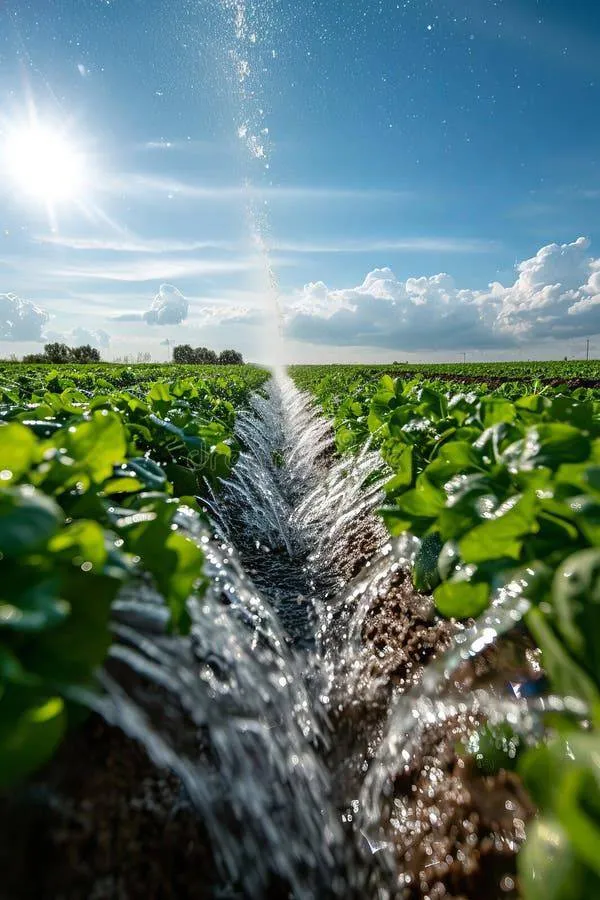
An established tree in the loamy soil of Isfahan may survive on one deep watering every seven to fourteen days in summer, while that same tree under a ten-minute sprinkle every day burns more water and merely looks fresh. Make the measure the moisture at thirty to fifty centimetres, not the colour of the soil surface. In the sandy soils of Yazd and around Kerman the interval shortens because water moves down faster; size each application so it does not run past the main root zone. In clay soil, apply more slowly and for longer so it does not run off. A first-year sapling is the exception: smaller volume, more often — but still into a basin or a dripper, not onto the leaves at midday.
Put the drip line at the canopy dripline
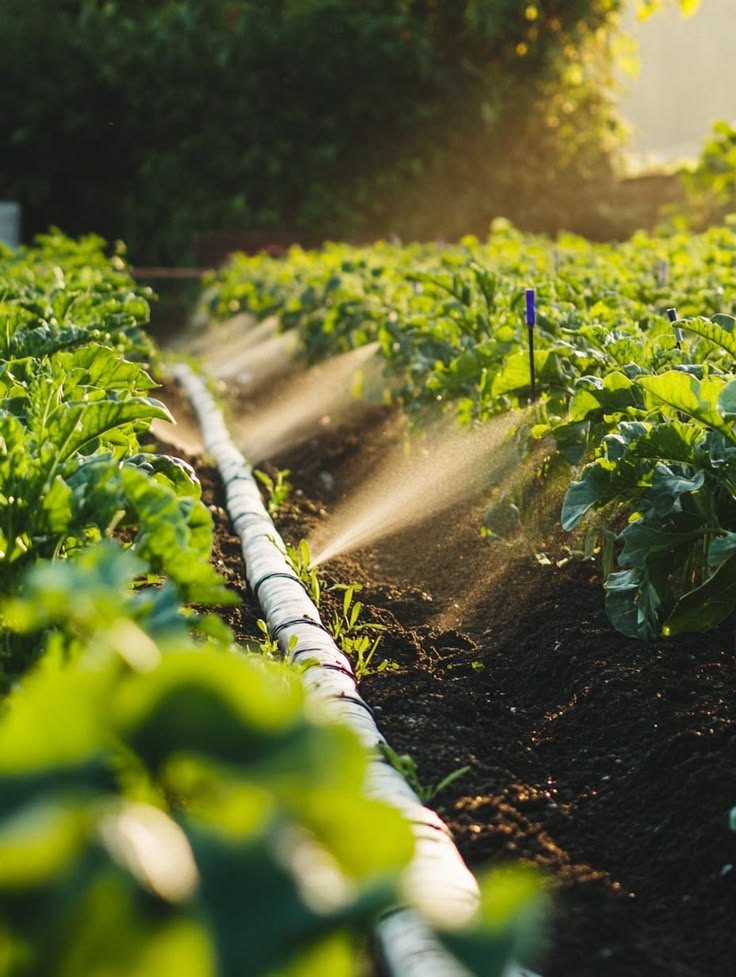
The absorbing roots are mostly under the edge of the canopy rather than against the collar. A drip ring that has sat at the foot of the trunk for three years gathers the roots in, and the tree becomes unstable in wind. As the canopy grows, move the line or the ring outwards. Match the flow to the soil texture: a two to four litre per hour dripper suits heavy soil far better than an impact sprinkler on the foliage. Take the filter and line flushing seriously with the calcareous, sandy well water of Kerman, or one side of the row goes thirsty and you think it is a disease. In pomegranate and pistachio orchards, water both sides of the row rather than the traditional one-sided furrow that gathers salt on one side.
The basin: a simple tool for a yard or a garden bed
Where you have no drip line, an earth or stone-edged basin sized to the canopy holds the hose water until it soaks in. Keep the basin's rim away from the collar; water must not sit against the trunk bark. In a heatwave, filling the basin slowly early in the morning beats a hard midday jet that washes the wall out and takes the water to the paving. Every two or three years clear the sediment and weeds out of the basin so it does not seal over. On the concrete pavements of Isfahan, if cutting a permeable strip is impossible, at the very least do not let the irrigation opening and the open soil around the tree fill with rubbish.
Morning and evening: do not leave midday to the tree
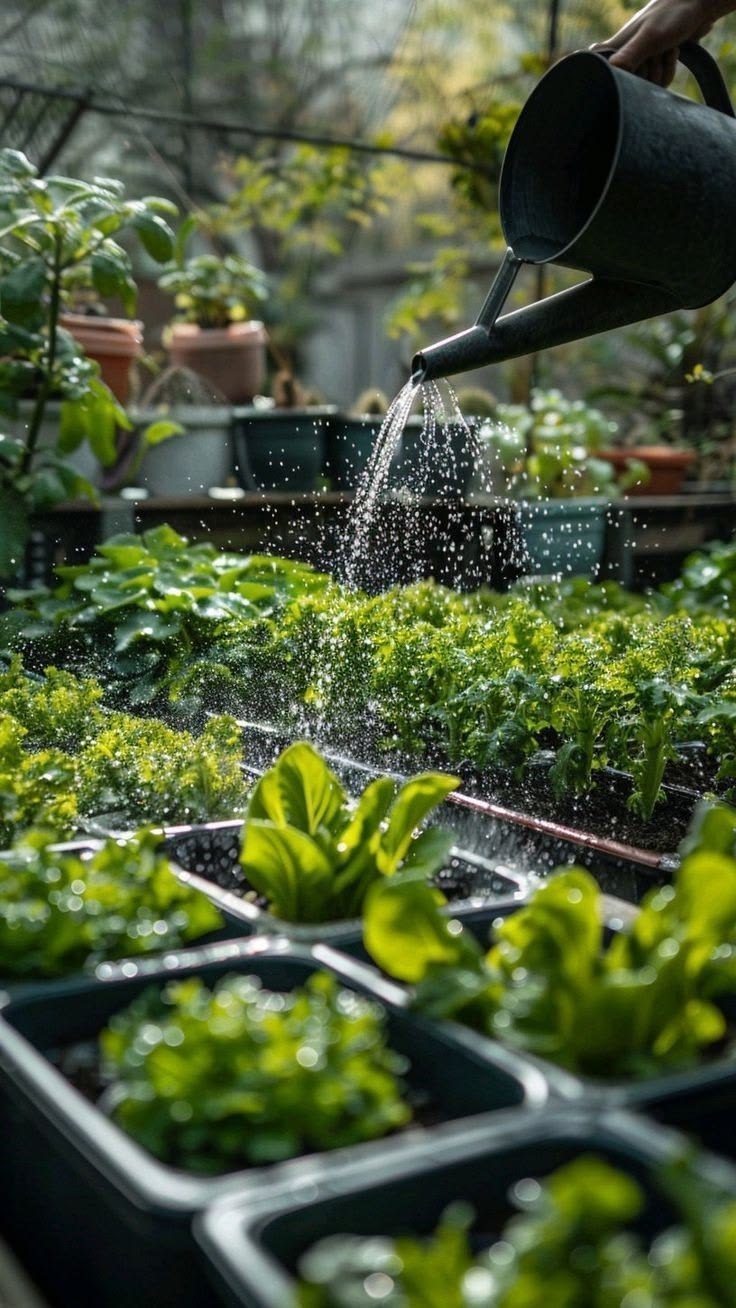
Midday evaporation in Shiraz and Ahvaz swallows a large part of a surface spray before it infiltrates. Wet leaves in fierce sun risk droplet scorch, and a hot, damp collar is a bed for fungus. Move irrigation into the cool hours. If your allocation only comes at midday, change the method from spraying to a basin or drip under the canopy so there is less contact with the air. Very late at night in the humid north can keep the leaves wet for a long time; on the dry plateau that risk is smaller than the midday loss, but keep the collar dry all the same.
Do not pour greywater at the foot of a tree without thinking
Lightly soaped washbasin water is arguable for tough trees in a bed away from salad greens, but greasy dishwater, strong laundry powder and salty kitchen waste water make the soil sodic and wreck its structure. In Iran's calcareous soils that sodium makes infiltration worse still. If you do use greywater, rotate it, keep it off the collar, and do not experiment with it on a valuable commercial tree. The priority is reducing losses of drinking water, not pouring the household's chemistry around the pomegranate. In cities such as Yazd and Kerman where well-water salinity is high, even that drinking water should not be gathered at the collar; make the basin wider and shallower so salt does not build up in one spot, and every few waterings increase the volume so a light leaching takes place.
- Separate the lawn circuit from the tree circuit; wetting the lawn does not water the tree.
- Do not use sprinkler irrigation on the lawn as the measure of what a plane tree or an olive needs.
- In a shared yard, one person should be responsible for the deep-watering schedule so that every household does not drag out a hose at midday. Do not put a rotor sprinkler for the lawn behind a tree; wetting the trunk at midday only brings collar fungus.
- Check the hose and the drip fittings for leaks monthly; in a shortage, a leak means allocation burned.
Watering a tree means getting water to the roots at depth; anything else is washing the yard at the expense of the summer allocation.
If your trees are weak this year despite frequent watering, change the depth and the placement of the water first, not the total flow. One simple check with a trowel in the canopy shade shows whether the water reaches the roots at all. Do not take a wet lawn in the evening as a sign that the plane tree has drunk; the lawn's roots finish the water in the top ten centimetres and the tree stays dry at forty. In Tehran apartment complexes, if the building's allocation is limited, give priority to the mature shade trees rather than to a sunlit patch of lawn. For pomegranate and olive orchards, two deep waterings with mulch beat six hose sessions on the collar. Farin Kesht Taban can lay out the basins, the repositioning of the drip line and the separation of the lawn circuit on your existing network in an Isfahan yard or a Yazd orchard, so the tree survives and not a litre is wasted.